


Is elite sports data truly democratised?
.png)
For most of the last decade, sports performance data followed a familiar pattern in which the best insights lived at the very top of pyramids. Big leagues with big budgets and heavy infrastructure could accommodate such setups. The other leagues, though, had to make do with existing systems that would not enhance their competitive advantage.
In 2025, that started to change. Not because teams and leagues suddenly started generating more revenue. And not because complexity disappeared. It changed because the industry finally accepted a simple idea (driven, of course, by advancements in technology): that elite-level insight shouldn’t depend on elite-level infrastructure.
From federations rethinking how they can leverage youth competitions to standardise performance data across all teams, to broadcasters looking for smarter ways to turn data into stories, the conversation shifted. The question stopped being “who can afford tracking?” and became “why isn’t this available everywhere?”
That shift is the backdrop to our recent work at ReSpo.Vision
When scale became more important than setup for teams and leagues
One of the clearest industry trends in 2025 was the move away from hardware-heavy solutions. Multi-camera systems, wearables, and other types of permanent installations. They will always still have a place, but they no longer define what’s possible for teams with different capacities
This is exactly where our single-camera, broadcast-based tracking stopped being a niche idea and became more of a fundamental “must-have” solution.
That belief was validated in a very real way this year when we were awarded the FIFA EPTS certification for our broadcast tracking system. For us, this certification was independent validation from the sport's biggest governing body that our performance-grade tracking data can be generated remotely, reliably, and at scale using nothing more than existing broadcast footage, without compromising quality. That same trust was reflected beyond the pitch when we closed a €5M funding round in 2025, reinforcing investor confidence in our technology and the direction the sports analytics industry is heading. Together, these moments showcased clear signals of trust from our stakeholders, shaping what comes next.


From elite tournaments to national programs
Another major shift this year was how federations approached data coverage.
Instead of focusing only on flagship teams or senior competitions, more organisations started thinking in systems. How do you benchmark talent across age groups? How do you maintain consistency between men’s, women’s, and youth teams? How do you build a data foundation that lasts longer than a single tournament?
That mindset is what led to new partnerships becoming public in 2025.
We began working with the KNVB this year to gather tracking data for national teams, supporting a unified approach to performance analysis across programmes. We also expanded our work with confederations, including CONCACAF, delivering tracking and analytics across multiple competitions without requiring any on-site infrastructure.
What these projects have in common is not just scale, but intent. Data is no longer collected solely for reporting. It’s collected to build long-term benchmarks, development pathways, and shared analytical languages across entire ecosystems.
That’s a big change from where the industry was even a few years ago.
How did our technology mature?
Earlier in the year, we launched ReSpo IQ, our analytics platform designed to turn complex tracking data into clear, actionable insights for coaches, clubs, leagues, and federations. Rather than adding features for the sake of it, the focus throughout the year was on making advanced analytics more usable in real-world environments, shaped by how performance teams and coaches actually work day to day.
That same thinking carried through to the launch of our new website. More than a visual refresh, it was an effort to clearly articulate our positioning, use cases, and product ecosystem. Less jargon, more clarity. A better reflection of where ReSpo.Vision is today, and the direction we’re heading as we continue to scale performance analytics across the global game.
How did we democratise knowledge on performance data? And what’s next?
One thing that became obvious to us in 2025 is how uneven the understanding of sports data still is.
Terms like AI, tracking, or advanced analytics are everywhere, but clarity often isn’t. Too many conversations jump straight to outputs without explaining foundations. What data actually represents. Where it breaks. How it should and shouldn’t be used.
That’s why we invested more time this year in publishing educational and analytical content to share our perspectives on how stakeholders can best leverage performance data and the single-camera 2D tracking data that we are offering. Moreover, we shed light on the industry's future and where it is heading.
To truly democratise elite data, performance analysts, coaches and teams need more understanding of it. If smaller clubs, emerging leagues, or new media players are going to benefit from better data, they need frameworks and actionable roadmaps.
A lot of the progress in football analytics this year didn’t happen behind screens but rather on the road.
We spent more time travelling than ever before. Not just to be visible, but to listen, share, and help move the industry forward together. ReSpo.Vision may have started as a cutting-edge AI company, but real progress happens when you sit with clubs, federations, and data partners, and talk honestly about what’s working and what isn’t.
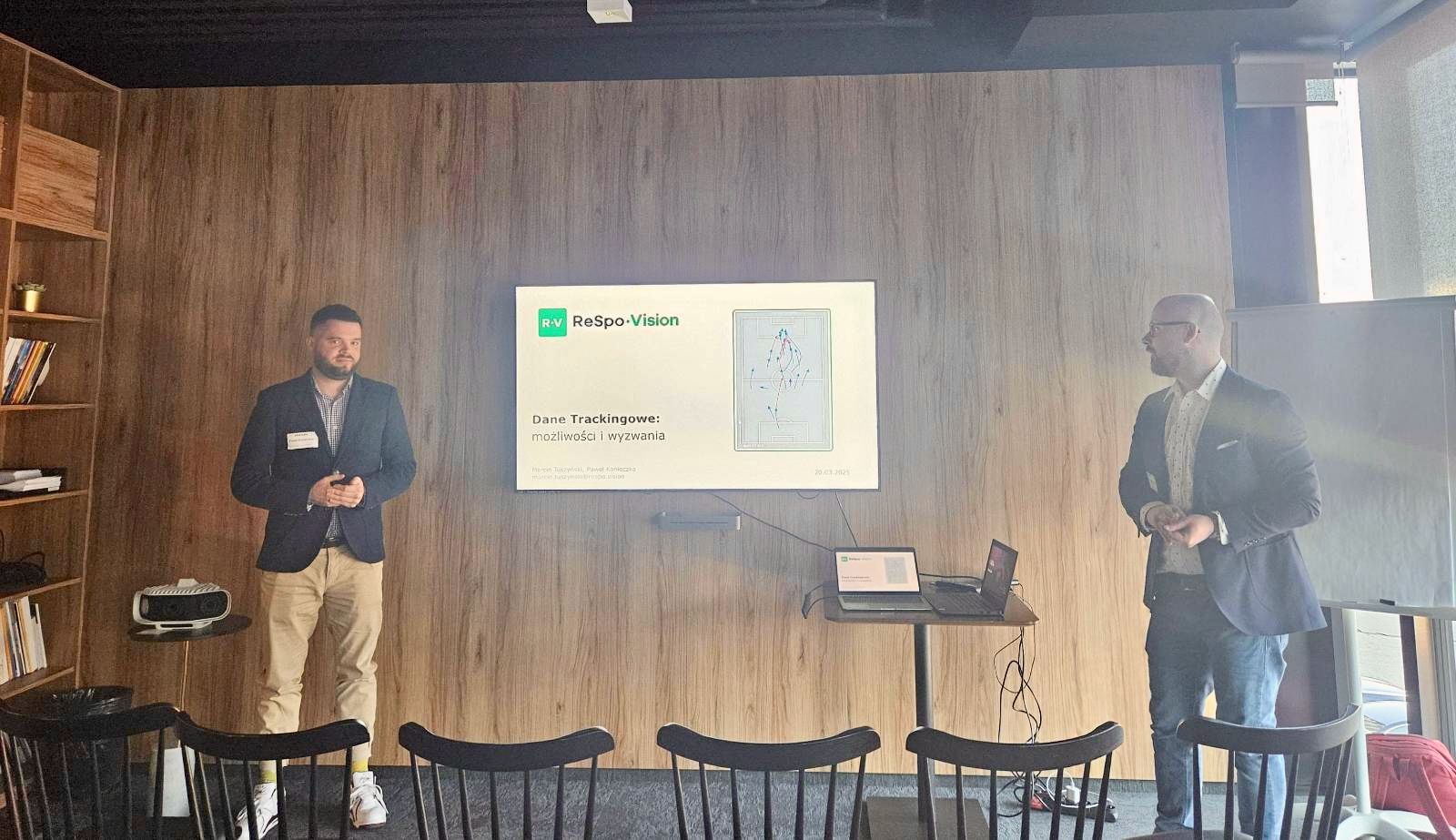
Throughout the year, we were part of key moments shaping the global sports analytics ecosystem. From the Sloan Sports Analytics Conference to SportsPro Live in London, and from Soccerex to Sofascore and European Football Clubs Connect, these events presented us invaluable opportunities to exchange ideas, challenge assumptions, and build relationships across the football ecosystem.
What stood out most was the openness. More collaboration, more transparency, and a shared understanding that the future of football analytics will be built together, not in silos. That’s the role we aim to play. Not just as a technology provider, but as an active contributor to where the industry goes next.

.jpeg)
Growth behind the scenes matters too
This year also marked an important step for us as a company. We strengthened the team with senior hires aligned with where the business is going, including David Eccles who joined us in July to lead and scale our commercial efforts, following our collaboration with Parisian sports consulting agency LaSource to support our business evangelisation efforts.
That kind of experience matters when conversations move from pilots to long-term partnerships. When organisations are betting not just on technology, but on the people behind it and who’s pitching it.

What this all adds up to
As Pawel, our CEO, mentioned during an interview with France 24, “our goal at ReSpo.Vision is to empower the Davids of the game to outplay the Goliaths”. Looking back, 2025 feels less like a year of isolated breakthroughs and more like a year of alignment. Our technology matured, and governing bodies, leagues, and performance teams are increasingly pulled in the same direction as us: toward scalable, accessible, high-quality data that works across every level of the game. We were proud to play a part in that shift.
From securing funding that allows us to keep investing in R&D, to earning FIFA EPTS certification, to working closely with national federations and confederations, the common thread was simple: proving that elite performance data doesn’t need elite barriers.
As we move into 2026, we see growing momentum around how performance data becomes a storytelling layer for media and broadcast. While 2025 was about strengthening our performance and analytics core, this is a vertical we plan to expand more intentionally in the new year.
The question ahead isn’t whether sports analytics will continue to evolve. It’s who will ensure that evolution benefits the entire ecosystem, not just the top tier. That’s the challenge we’re building for.

